
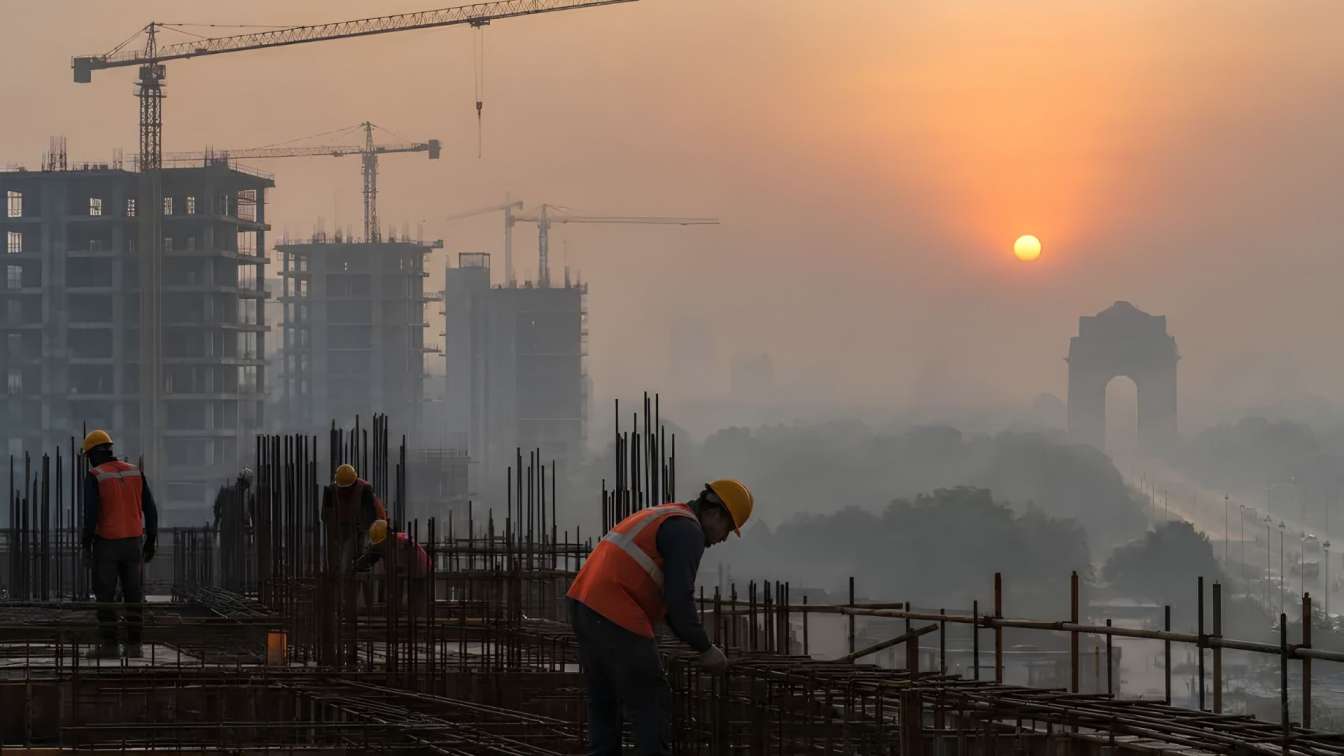
Every year, Delhi’s winter air brings the same question to anyone building a home in the city: what happens to my construction schedule? This year there is a clearer answer, because the timeline has been defined in advance. Outdoor construction restrictions are scheduled from November 1 to January 31, and a broader construction and demolition ban applies from December 10 to January 20, as reported by BW Businessworld.
If you are a landowner planning a new home, or you already have a project underway in South Delhi, the Delhi winter construction ban matters less as a headline and more as a scheduling problem. This guide explains what the restrictions mean in practice, where the real risk sits, and how to plan around it.
What Are Delhi’s Winter Construction Restrictions?
The curbs are part of Delhi’s wider effort to control winter air pollution, and they operate alongside the GRAP (Graded Response Action Plan) framework, which applies measures in stages depending on how severe air quality gets. In winter 2025-26, Stage I to Stage IV measures were implemented based on CAQM orders.
For the current season, the key dates are:
- November 1 to January 31: restrictions on outdoor construction activity.
- December 10 to January 20: a broader construction and demolition ban.
Exact permitted and restricted activities can change with notifications from the authorities, so always confirm the latest position before finalising any site schedule.
The Real Risk Is Not the Ban. It Is the Restart.
Most homeowners focus on the number of days work stops. Industry voices point to something else. Parveen Jain, President of Naredco, has noted that the major challenge after a ban is labour remobilisation, which in some cases can take close to three months because workers move elsewhere during shutdowns.
That changes how you should think about the calendar. A site that stops on December 10 does not necessarily restart at full strength on January 21. Skilled crews such as masons, shuttering carpenters, electricians and plumbers are in demand across NCR, and a project that loses its team may wait for them to return or rebuild from scratch.
How Winter Curbs Affect Construction Cost
Restrictions rarely hit just one part of the work. They touch labour, material delivery, contractor arrangements and procurement at the same time. Developers speaking to BW Businessworld expect some cost increase, with the size depending on the project and how long restrictions last.
For a homeowner, cost pressure usually shows up in three places:
- Material price movement when everyone buys at the same time after restrictions lift.
- Labour rates as contractors compete to restart sites.
- Idle overheads such as site security, equipment hire and supervision during the stoppage.
How the Impact Differs by Construction Stage
The same restriction affects a project very differently depending on where it stands.
- Excavation and foundation stage: most exposed. Earthwork and other dust-heavy activity is what pollution-control measures target first.
- Structure and casting stage: sensitive to stoppages because of curing schedules, sequencing and shuttering crews that are hard to re-mobilise.
- Finishing stage: industry bodies have asked that internal work such as finishing, electrical installation and plumbing be allowed to continue under environmental safeguards. Whether and how this is permitted depends on official notifications, so do not assume it.
What a Well-Run Builder Does Before the Ban
The firms that handle winter well tend to do the same few things early.
- Front-load procurement. Steel, cement, tiles, sanitaryware, electrical fittings and joinery inputs are ordered and secured before the restriction window, so there is no scramble afterwards.
- Sequence non-polluting work for the restricted period. Planning, approvals paperwork, material inspection, design finalisation and work that falls outside restricted activities can be lined up for the weeks when heavy construction cannot run.
- Keep the crew connected. Retaining core teams through the shutdown, even partially, shortens the restart.
- Communicate early and in writing. Clients should hear about schedule changes before they happen, with a revised timeline they can plan rent, loans and relocation around.
This is the approach Grovy India has taken. The company has built the winter restrictions into its project schedules, is securing materials ahead of time, and is planning non-polluting activities for the restricted period. Grovy’s projects are currently on schedule, and it does not expect possession delays from the winter restrictions, with FY27 delivery of roughly 50,000 sq ft. Winter curbs in Delhi are not new, and the practical lesson from years of working in the city is that a defined timeline is easier to plan around than an uncertain one.
A Checklist for Landowners Building in Delhi This Winter
If you have a project running or about to start, these are the questions worth asking your construction company in Delhi right now:
- Which stage will my project be in on November 1, and on December 10?
- Which materials have already been ordered or stored for the next three months?
- Which activities, if any, can continue during the restriction window, and on what basis?
- How will you retain the site team through the shutdown?
- What is the revised handover date if work stops, and how will changes be communicated and documented?
- Are cost escalations covered in the agreed scope, or will they be billed separately?
A builder who has clear answers to these has already done the planning. One who is vague is likely to improvise after the restrictions begin.
Why Builder Choice Matters More in a Restricted Season
In a normal season, a good builder and an average one can look similar on paper. A compressed construction window exposes the gap. Procurement discipline, labour relationships and honest client communication decide whether your home stays close to schedule or slips by months.
For South Delhi homeowners considering turnkey construction in Delhi or a collaboration model with a builder, timing your start also deserves thought. Starting design and approvals now, so that structural work begins with the new construction season, is often smarter than rushing excavation into the restriction window.
Frequently Asked Questions
When is the Delhi winter construction ban in 2026?
Outdoor construction restrictions are scheduled from November 1 to January 31, and a broader construction and demolition ban is scheduled from December 10 to January 20. Check the latest government and CAQM notifications for the exact scope.
Will the winter construction ban delay my home construction in Delhi?
It can, depending on your project stage and how well your builder has planned. Projects that secure materials early, schedule non-polluting work for the restricted period and retain site teams are less likely to see major delays.
Why does a construction ban cause delays beyond the ban dates?
Labour remobilisation. Workers often move to other sites or return home during shutdowns, and rebuilding a skilled crew afterwards can take weeks and, in some cases, up to around three months according to industry estimates.
Will construction costs go up because of the winter restrictions?
Some increase is expected by developers, though the size varies by project and by how long restrictions last. Early procurement and clear contractor agreements help control it.
Can finishing work such as electrical and plumbing continue during the ban?
Industry bodies have asked for internal finishing, electrical and plumbing work to be allowed under environmental safeguards. Whether it is permitted depends on official notifications, so confirm with your builder before assuming work can continue.
Should I start a new house construction in Delhi before winter?
It depends on timing. Starting design, approvals and procurement now, and beginning heavy structural work once restrictions lift, is often more efficient than starting excavation just before the ban.
How should my builder communicate delays caused by the ban?
Proactively and in writing, with a revised timeline and a clear explanation of what changed, so you can plan rent, finances and relocation without surprises.
Plan Your Winter Construction Schedule With Grovy India
Grovy India is a BSE-listed construction and redevelopment company focused on luxury homes in South Delhi, with more than four decades of experience. If you want a realistic view of how the winter restrictions will affect your plot or ongoing project, our team can walk you through the schedule, procurement plan and handover timeline.
Talk to the Grovy India team to plan your construction around Delhi’s winter calendar.


