
As South Delhi’s top luxury home builder, Grovy India focuses on real estate and construction with quantity surveying, cost consultancy and green building solutions, with all government approvals taken from the MCD. We offer recognised building consultancy across luxury residential projects and renowned addresses such as Lutyens’ Delhi.
Every builder makes promises before construction begins: premium materials, a clear timeline, a fixed budget, and a home that matches the drawings. Most of these promises are made in good faith. The trouble is that a house is built over many months, behind walls, under plaster and beneath tiles, and by the time a quality problem becomes visible, correcting it is expensive, slow and sometimes impossible.
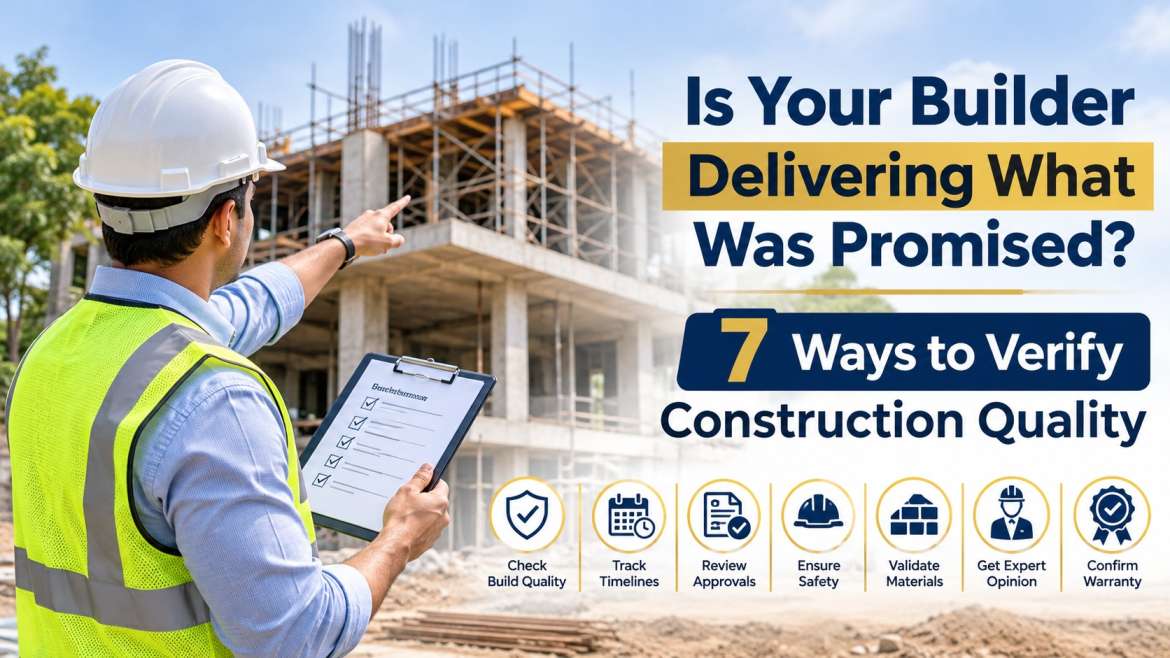
If you are a landowner in South Delhi planning a luxury home, a redevelopment or a collaboration project, the central question is simple: how do you know the quality you were promised is the quality being built? Trust matters, but verification matters more. This guide explains seven practical ways to verify construction quality at every stage, and why many careful owners now bring in one of the project management consultants in delhi to watch the site on their behalf.
Why Does a Gap Between Promise and Delivery Happen?
Quality gaps rarely come from dishonesty alone. More often they come from a combination of vague agreements, pressure on cost and time, and nobody being accountable for checking the work independently. Common causes include:
- Vague specifications: a contract that says “good quality tiles” or “branded fittings” without naming brand, grade or thickness leaves room for substitution.
- Cost pressure: when material prices rise, the easiest place to save is in the parts the owner cannot see, such as steel, concrete mix, waterproofing and wiring.
- Schedule pressure: rushed curing, skipped testing and compressed finishing all weaken a building quietly.
- No independent eye on site: when the same party builds, inspects and certifies its own work, errors go unreported.
- Owner distance: busy owners visit occasionally, see a tidy site and assume everything is fine.
The seven methods below are designed to close each of these gaps. Together they turn a promise into something you can measure.
Way 1: Convert Every Promise into a Written, Measurable Specification
The first and most powerful step happens before a single brick is laid. A promise that is not written down, in detail, cannot be enforced. Insist that the agreement includes:
- Architectural, structural and services drawings, with the building approvals taken from the Municipal Corporation of Delhi (MCD) clearly attached.
- A detailed Bill of Quantities (BOQ) listing each item, its quantity, its unit rate and its specification.
- A material schedule naming the brand, grade and size for steel, cement, bricks or blocks, tiles, marble, sanitaryware, electrical fittings, paint and waterproofing.
- A construction schedule with milestones, and a payment schedule linked to those milestones.
- Clear terms for what happens if an item is substituted, delayed or changed.
When specifications are this precise, every later inspection becomes a simple comparison: what was promised against what is on site. In turnkey luxury construction, where pricing may start from ₹2650 per sq ft and rise with the amenities you choose, the specification document is what keeps that price meaningful.
Way 2: Appoint an Independent Project Management Consultant
The single most effective way to verify quality is to place a qualified, independent person on the project whose job is to protect your interests. This is the role of a project management consultant (PMC). A PMC reviews drawings, checks materials, inspects each stage of work, verifies measurements and bills, tracks the schedule and reports to you honestly.
This is why project management consultants in real estate have become a standard part of well-run residential and commercial projects. They bring technical knowledge, a checklist-driven process and, importantly, independence. A PMC does not earn more when corners are cut, so their incentives line up with yours.
When you search for the top project management consultants in delhi, look beyond a polished brochure. Ask these questions:
- How many residential projects in Delhi have they supervised, and can you visit one?
- Do they have civil, structural and MEP expertise in-house, or do they outsource inspections?
- What does their reporting look like: weekly written reports, photographs, snag lists?
- Are they independent of the contractor, or do they share commercial interests?
- How do they handle disagreements, rework and change requests?
In a collaboration model, where a landowner partners with a builder to develop a plot, a transparent project management role is even more valuable because it keeps both sides aligned on scope, cost and quality. Grovy India has delivered 1500+ luxury home projects to satisfied clients since 1985, and acts as a project management partner for collaboration home construction in South Delhi. You can read more on our turnkey construction solutions.
Way 3: Verify Materials Before They Go into the Structure
Materials are where most hidden quality compromises occur, because once steel is cast into concrete or a pipe is buried in a wall, nobody can inspect it again. Build verification into your process:
- Steel: check that TMT bars carry the grade and brand named in the specification, and ask for the manufacturer’s test certificate for each delivery.
- Cement and concrete: confirm the cement brand and grade, and for ready-mix concrete, ask for delivery challans showing the grade and time of batching.
- Concrete testing: cube samples should be taken at the time of casting and tested at the prescribed ages, with results shared with you.
- Bricks, blocks and sand: inspect samples for strength, size consistency and cleanliness before large quantities are accepted.
- Finishing materials: compare tiles, marble, fittings and paint with the approved samples, including batch numbers, so that the final delivery matches what you chose.
- Invoices and delivery records: a simple record of what entered the site, from which supplier and in what quantity, makes substitution much harder.
A project management consultant can run this process daily, which is difficult for an owner to do alone.
Way 4: Inspect Stage by Stage with Clear Approval Points
Quality is built in layers, and each layer should be inspected and approved before the next one covers it. Think of these as hold points: the work does not move forward until the check is signed off.
| Construction stage | What to verify before approval |
|---|---|
| Excavation and foundation | Depth and dimensions as per drawings, soil condition, reinforcement placement and cover, and concrete grade |
| Columns, beams and slabs | Bar sizes, spacing, lap lengths, shuttering alignment and level, and proper curing after casting |
| Masonry and plastering | Wall alignment, plumb, joint quality, plaster thickness and finish |
| Waterproofing | Surface preparation, product used, application layers and a water-ponding test on terraces and wet areas |
| Electrical and plumbing | Conduit and pipe routing, wire gauge, pressure testing of lines, and concealed work photographed before closing |
| Flooring and finishing | Tile and marble levels, hollow-sound checks, grout quality, paint finish and joinery fit |
Ask for a short written sign-off at each hold point, along with photographs. Pay particular attention to reinforcement before concrete is poured and to waterproofing before it is covered, because these cannot be corrected cheaply later.
Way 5: Check Measurements, Costs and Billing Against the BOQ
Quality and cost are closely linked. A builder who is overcharging or under-delivering will often show it in the numbers before it shows in the building. Make sure that:
- Every running bill is checked against work actually completed on site, not just against a payment calendar.
- Quantities in the bill match the BOQ, and any additional quantity is explained and approved in writing.
- Payments are released against verified milestones, not against promises of future progress.
- Variations, such as a change of tile or an extra room, are priced and recorded before the work is done, not after.
A project management consultant typically verifies measurements and certifies bills, which gives you confidence that you are paying only for completed, approved work. This discipline also protects your budget: transparent costing is one of the strongest signals of a trustworthy builder.
Way 6: Insist on Documentation and Regular Progress Reporting
Good builders are comfortable being documented. If a builder resists written records, that itself is information. Request:
- A weekly progress report showing work done, work planned, delays and their causes.
- A dated photo record of each stage, especially of concealed work.
- A site diary recording labour strength, material deliveries and instructions given.
- A running snag list, so defects are logged and closed as the work proceeds rather than discovered at the end.
- Copies of test certificates, approved samples and revised drawings.
This record is valuable in three ways. It keeps the schedule honest, it gives you evidence if a dispute arises, and it becomes a useful asset when you later maintain, renovate or sell the property. Project management consultants in real estate usually maintain this documentation as part of their standard process, so you receive a complete file without having to chase for it.
Way 7: Run a Structured Pre-Handover Inspection and Understand the Defect Liability Period
The final inspection is your last chance to catch issues while the builder is still engaged and motivated to complete the project. Do not rush it, and do not do it casually. Walk through the home with a checklist and a qualified inspector, ideally the same consultant who tracked the project:
- Flooring: check tile and marble levels, joints, matching of shade, polish quality and any hollow or cracked pieces.
- Walls and ceilings: look for cracks, dampness marks, uneven plaster and paint patches.
- Doors, windows and joinery: test locks, hinges, alignment and smooth operation.
- Electrical: test every switch, socket, light point and the distribution board, and confirm earthing.
- Plumbing: run every tap and shower, check drainage, look for leaks and check water pressure.
- Terrace and garden areas: check slope for water drainage, waterproofing, and finishing of landscaped areas.
- Documentation: collect all drawings, warranties, manuals, completion papers and approvals.
Finally, be clear about the defect liability period. This is the agreed time after handover during which the builder remains responsible for rectifying defects that appear. Make sure it is stated in your agreement, along with how complaints are logged and how quickly they will be resolved. A builder who stands behind the work after handover is demonstrating confidence in the quality delivered.
How Grovy India Approaches Quality Verification
As a south delhi builder with more than four decades of experience, Grovy India treats verification as part of the construction process, not an afterthought. Specifications are fixed in writing, materials are checked on arrival, each stage is inspected before the next begins, and owners receive clear progress updates. Whether you choose turnkey construction or a collaboration model for your plot, the independent-style supervision that project management consultants in delhi offer is built into how we deliver, so you are never left wondering whether the promise is being kept. You can see the kind of work we deliver in our luxury residential projects in south delhi.
Quick Checklist: Is Your Builder Delivering What Was Promised?
- Are all specifications, brands and grades written into the agreement?
- Is someone independent inspecting the work on your behalf?
- Are materials checked and test certificates shared?
- Is each stage approved before the next one begins?
- Do running bills match verified progress and the BOQ?
- Are you receiving regular written and photographic reports?
- Is there a structured pre-handover inspection and a clear defect liability period?
If you can answer yes to all seven, you are well placed to receive the home you were promised. If several answers are no, it is worth appointing a consultant now, while the project can still be steered.
Frequently Asked Questions
How do I check whether my builder is using the materials promised?
Compare every delivery with the material schedule in your agreement. Ask for manufacturer test certificates for steel, delivery challans for concrete, and approved samples for finishing materials. Keep a dated photo record, and have a qualified inspector or consultant verify materials before they are used.
What does a project management consultant do during home construction?
A project management consultant reviews drawings and specifications, inspects materials and workmanship at every stage, verifies measurements and bills, tracks the schedule and reports progress to the owner. Their role is to ensure the work matches what was promised, without a commercial interest in the contractor’s savings.
How do I choose among the top project management consultants in Delhi?
Look at their experience with residential projects in Delhi, the technical depth of their team, their independence from contractors, the quality of their reporting, and references you can visit. Ask for a sample progress report and a sample snag list before you decide.
Why are project management consultants in real estate important?
Project management consultants in real estate provide independent supervision, cost control and quality assurance. They reduce the risk of material substitution, delays and billing disputes, and they give owners a clear, documented view of how the project is progressing.
At which stages should construction quality be inspected?
Inspect at every major stage: foundation, reinforcement before concreting, slabs and columns, masonry, waterproofing, electrical and plumbing before closing, flooring and finishing, and the final pre-handover inspection. Concealed work should be checked and photographed before it is covered.
What is a defect liability period in construction?
A defect liability period is the agreed time after handover during which the builder must rectify defects that appear in the completed work. It should be written in your agreement, along with the process for reporting defects and the time within which they will be fixed.
Can a landowner verify quality without technical knowledge?
Yes. A landowner can insist on detailed written specifications, stage-wise approvals, regular reports and milestone-linked payments, and can appoint a qualified consultant to handle the technical checks. This lets you stay in control without needing to inspect every detail yourself.
Conclusion: Verify, Don’t Just Trust
A good builder welcomes scrutiny, because transparency protects both sides. By turning promises into written specifications, appointing an independent consultant, verifying materials, inspecting stage by stage, tracking costs, keeping records and conducting a careful handover inspection, you give yourself the best possible chance of receiving exactly what was promised.
If you are planning a luxury home, a redevelopment or a collaboration project in South Delhi and want a builder who is open to verification at every stage, speak to the team at Grovy India. Explore our turnkey construction solutions or visit our projects page to see how we deliver on our promises.